


As a leading cosmetic dermatology practice in New York City, UnionDerm receives countless questions from patients about wrinkles: why they form, which wrinkle treatments work best, and when to start. Many of our patients come to us looking for ways to soften forehead lines, smooth wrinkles, frown lines, crow’s-feet, and deeper creases while keeping their results natural. Dr. Robyn Gmyrek is a board-certified dermatologist at UnionDerm with expertise in cosmetic and general dermatology, including laser surgery, injectable treatments such as Botox and dermal fillers, and sclerotherapy. Using her advanced knowledge of facial anatomy, Dr. Gmyrek treats wrinkles at every level of the face, from the skin’s surface to the muscle, fat, and bone beneath it.
Dr. Gmyrek is a Phi Beta Kappa, magna cum laude graduate of New York University and earned her medical degree from Columbia University College of Physicians and Surgeons. She completed her internal medicine internship at Cornell University-New York Hospital and her dermatology residency at Columbia, where she served as Chief Resident in Dermatology. She later joined Columbia’s Department of Dermatology faculty, where she founded the Cosmetic Skin and Laser Center and served as Division Chief of Cosmetic Dermatology. She is a Diplomate of the American Board of Dermatology and a member of the American Academy of Dermatology, the American Society for Dermatologic Surgery, and the American Society for Laser Medicine and Surgery. She has been recognized by Castle Connolly America’s Top Doctors, New York Magazine’s Best Doctors, and Super Doctors.
We have compiled your most-asked questions about wrinkles and wrinkle treatments for Dr. Gmyrek to answer.
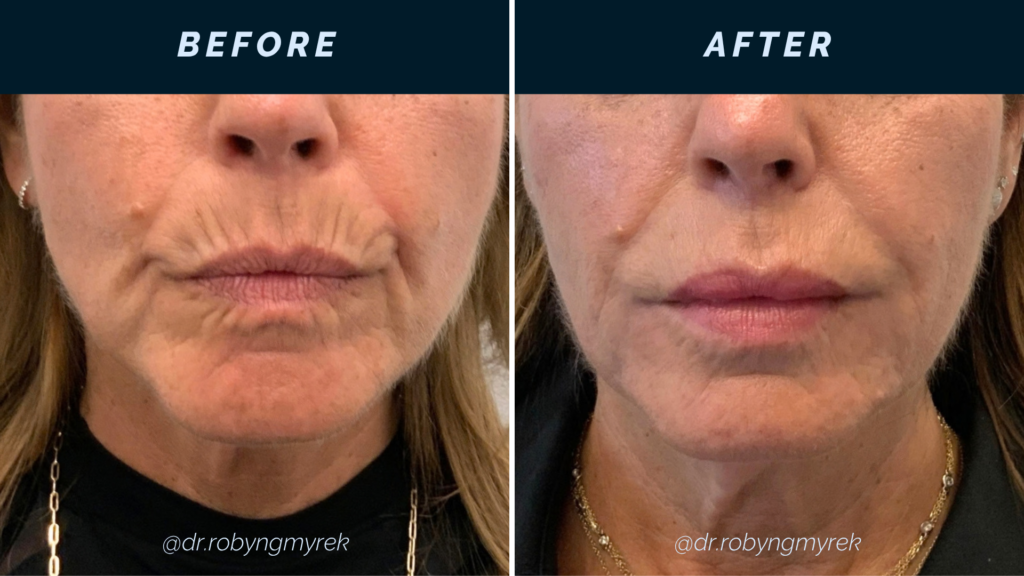
Why Wrinkles Form
1. What causes wrinkles to form, and what is actually happening in the skin as they develop?
Wrinkles and fine lines develop because the skin gradually loses the ability to maintain its structure, elasticity, hydration, and resilience. Starting in our twenties, production of collagen and elastin decreases, while existing collagen becomes more fragmented and disorganized. The skin also becomes thinner and loses some of its ability to retain moisture, causing sagging skin. At the same time, repeated facial muscle movement creates lines on the outer layer of the skin in areas such as the forehead, between the eyebrows, and around the eyes.
Sun exposure is one of the biggest accelerators of this process. Ultraviolet (UV) radiation damages collagen and stimulates enzymes that break down the skin’s structural support. Over time, the combination of sun damaged skin, collagen loss, elastin damage, repeated muscle movement, changes in facial fat, and even changes in the underlying facial skeleton cause facial wrinkles and sagging of the skin. The best way to prevent and reduce wrinkles from sun exposure, is to apply sunscreen to your skin daily, wear protective clothing when exposed to UV rays, and utilize skin care like vitamin c.
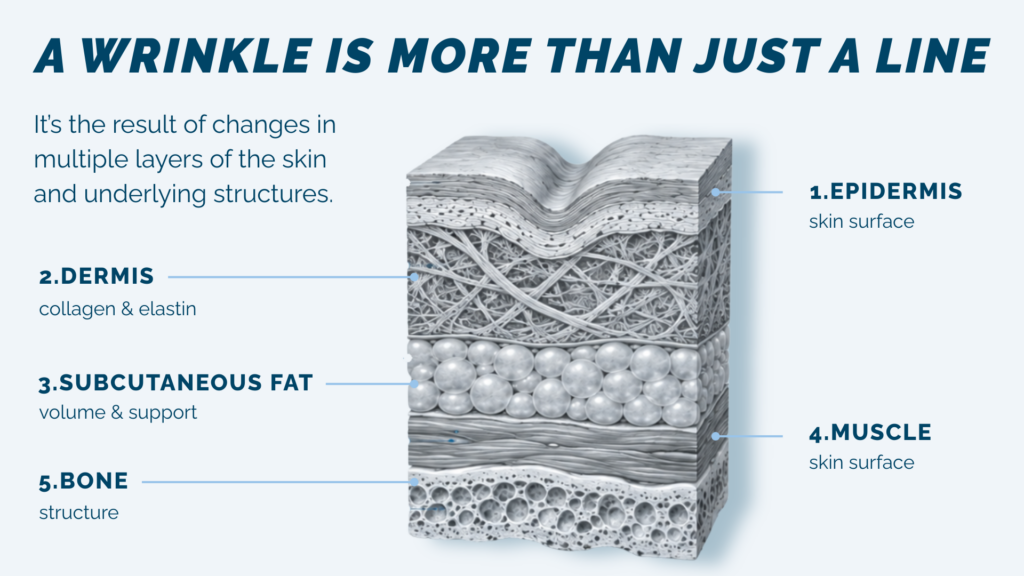
A wrinkle is not simply a crease on the surface of the skin—it is the visible result of changes occurring throughout all the facial tissues.
2. What’s the difference between dynamic wrinkles and static wrinkles, and why does that distinction change how you treat them?
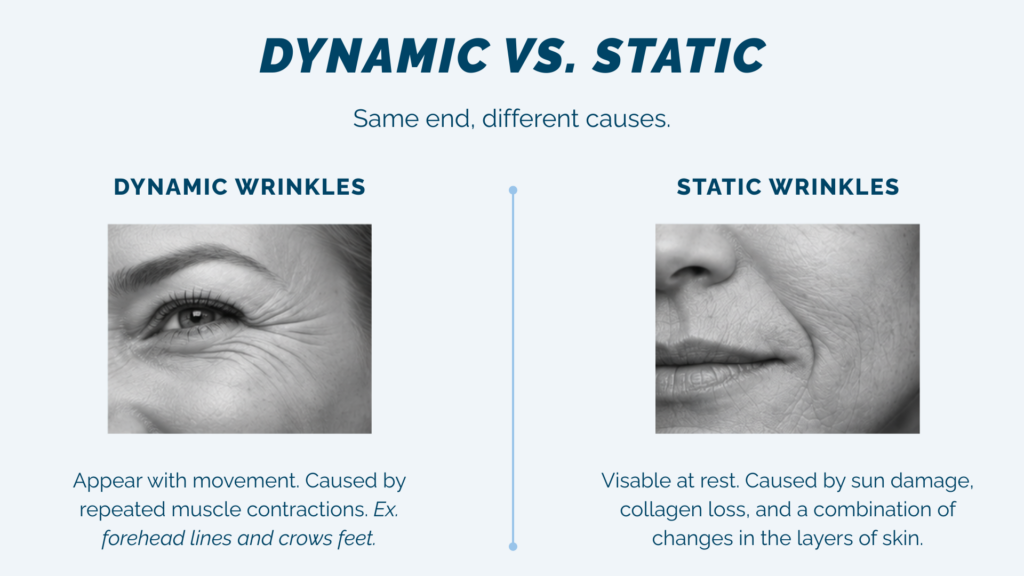
Dynamic wrinkles are lines that appear when you move your facial muscles. Think about the horizontal lines on your forehead when you raise your eyebrows, the “11” lines between the eyebrows when you frown, or crow’s-feet when you smile. These wrinkles are primarily related to repeated muscle contraction.
Static wrinkles, on the other hand, remain visible even when your face is completely relaxed. They develop when years of repeated movement are combined with collagen loss, sun damage, thinning skin, and changes in the underlying tissues.
This distinction is important because different problems require different treatments. Botulinum toxin treatments, such as Botox and Dysport, work by temporarily reducing muscle contraction and are particularly effective for dynamic wrinkles. Static wrinkles may require a combination of treatments that improve skin quality, stimulate collagen, replace lost volume, or resurface the skin. Depending on the wrinkle, that could include laser resurfacing, microneedling, radiofrequency treatments, or dermal fillers.
3. Beyond aging, what accelerates lines and wrinkles — sun exposure, sleep position, screen posture, genetics?
While our genetics absolutely play a role, it is estimated that over 50% of our aging can be modified by our lifestyle choices. Sun exposure is the most important environmental accelerator of visible skin aging. UV radiation breaks down collagen, damages elastin, increases pigmentation, and contributes to the development of fine lines and wrinkles. This is why daily broad-spectrum sunscreen is one of the most important anti-aging treatments we have.
Screen posture is more nuanced. Looking down at a phone does not directly create wrinkles in the same way UV exposure does, but repetitive facial expressions, squinting, and prolonged neck positioning may contribute to wrinkles around the eyes and neck, now known as “tech neck”.
Sleep position can contribute to wrinkles by applying repetitive pressure to the face for years. This compression from lying on the same side for years can cause vertical lines, asymmetrical flattening of the face, and creases known as “sleep lines” on the forehead, cheeks, and chest.
In addition, smoking, poor nutrition, chronic stress, inadequate sleep, and environmental pollution all significantly contribute to accelerated skin aging and impaired skin repair.
The Anatomy: Treating Wrinkles at Different Levels
4. Why do fine lines and wrinkles need to be treated at different levels of the skin rather than just on the surface?
Wrinkles need treatment at different depths because they are not purely a skin-surface problem. They are caused by changes at all levels of the skin from surface collagen loss to fat loss, deep muscle movement and age related facial bone loss.
If you only treat the surface, you may improve skin texture and some fine lines but still see deeper folds or changes in facial contour. This is why treating wrinkles is a layered process. Depending on what is contributing to the wrinkles, treatment may involve skincare and sunscreen for the skin, Botox or another neuromodulator for muscle activity, laser or radiofrequency treatments for collagen remodeling, and strategically placed fillers for volume and structural support.
5. Can you walk through the layers you treat — skin surface, muscle, fat, and bone — and what each one contributes to how someone looks?
Think of the face as a structure built in layers.
- Skin: The skin is the outermost layer, and its thickness, hydration, pigmentation, collagen, elastin, and texture determine how smooth and healthy the surface looks. Treatments include skincare, lasers like Fraxel and treatments such as radiofrequency microneedling, Sofwave, Ultherapy and thermage can make a difference. Multiple treatments over time can improve the look of fine wrinkles and laugh lines that sit on the top layers of the skin.
- Fat: provides youthful fullness and contour. With aging, fat compartments shrink or descend, contributing to hollowing, folds, and changes in facial proportions. Dermal fillers can sometimes restore lost volume and provide needed support for the overlying skin.
- Muscle: Years of repeated muscle contraction causes dynamic wrinkles, which is why botulinum toxins can soften certain expression lines. In addition, weakening the muscle can also be used to prevent wrinkles from occurring in certain areas of the face.
- Bone: Facial bones—including the jaw, cheeks, and eye sockets—recede and shrink as part of the aging process. As the bone gets smaller, the skin and fat tissues have less support, leading to laxity and wrinkles.
The important point is that these layers interact. Treating the face well means understanding the entire structure—not simply treating the wrinkle you see in the mirror.
6. How do volume and bone loss over time contribute to wrinkles, and how do you address it?
As we age, we don’t simply develop wrinkles because the skin gets older. We also lose and redistribute facial fat, and the underlying facial skeleton undergoes gradual remodeling. When structural support decreases, the tissues above it can change position, and the skin may develop folds, hollows, and laxity.
This is particularly important in areas such as the temples, cheeks, under-eyes, nasolabial folds, and around the mouth. For example, loss of cheek volume could be the main cause of smile lines or nasolabial folds – not the skin of the wrinkle itself. Treatment therefore isn’t always about putting something directly into the wrinkle.
The goal is not to replace every bit of volume lost with age. Instead, I look at the face as a whole and determine where restoring a small amount of strategic support can improve the surrounding wrinkles and contours.
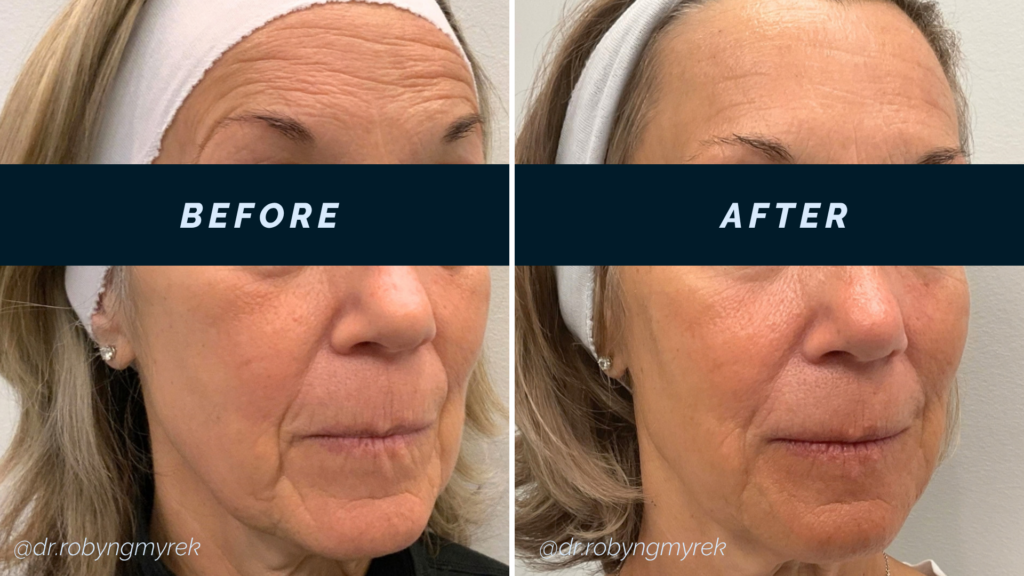
Wrinkle Treatments at UnionDerm
7. What are some common injectable treatment options for wrinkles and aging skin?
There are several categories of injectables, and choosing among them depends on why the wrinkle exists rather than simply where it appears.
- Botulinum toxins—including Botox Cosmetic, Dysport, Daxxify, and Xeomin—temporarily reduce muscle activity. They are particularly useful for dynamic wrinkles such as forehead lines, frown lines between the eyebrows, and crow’s-feet.
- Dermal fillers restore volume and support in areas where aging has created hollows, folds, or contour changes. Hyaluronic acid fillers include products such as Juvéderm, Restylane, and RHA. Other options include biostimulatory fillers, such as Radiesse and Sculptra, which work primarily by stimulating collagen production over time.
- Platelet-Rich Plasma (PRP) and Platelet-Rich Fibrin (PRF) use growth factors from your own blood to stimulate collagen and elastin production. When injected or micro-needled into the skin, they help repair damaged tissue and stimulate new collagen resulting in smoother, firmer skin that gradually reduces the appearance of fine lines and wrinkles over time.
A skilled injector, ideally a board-certified dermatologist, evaluates facial anatomy, skin quality, muscle movement, volume loss, and the patient’s goals before deciding which injectable—or combination of injectables—is appropriate.
8. What are some common laser treatment options for wrinkles?
Laser skin resurfacing treatments can address wrinkles by improving the quality and structure of the skin itself. Different lasers work at different depths, so the appropriate treatment depends on the amount of sun damage, degree of wrinkling, skin type, downtime tolerance, and desired result.
Fractional CO2 lasers are examples of ablative resurfacing treatments. They remove controlled portions of the outer skin and stimulate significant collagen remodeling, making them particularly useful for more pronounced wrinkles, sun damage, and textural irregularities.
For patients who want less recovery time, fractional non-ablative lasers, such as Fraxel Dual, can stimulate collagen remodeling without removing the entire surface of the skin. Other technologies, including Clear + Brilliant, can be useful for early signs of aging and maintaining skin quality.
The key is matching the technology to the problem. A more aggressive laser isn’t automatically a better treatment; the goal is to achieve meaningful collagen remodeling while respecting the patient’s skin and lifestyle.
9. Why are combination treatments more effective for wrinkles than a single treatment on its own?
Because facial aging is not caused by one thing, it cannot be completely corrected by one treatment. A wrinkle may involve changes in the skin, muscle activity, collagen, fat, and underlying structural support—all at the same time.
This is why I use a layered approach to facial rejuvenation. A treatment plan might combine selected filler to restore structural volume and a deep ultrasound treatment to lift and tighten the jowls.
The goal is not to do more treatments simply for the sake of doing more. It is to use the right treatment for the right layer, in the right patient, at the right time. That approach generally produces a more balanced and natural result than trying to make one treatment do everything.
10. When should I begin wrinkle treatments, and how do you decide where a patient should start?
There is no single age when everyone should begin wrinkle treatments. I prefer to think about it as prevention, maintenance, and correction rather than an arbitrary number.
Everyone can begin with the fundamentals: daily broad-spectrum sunscreen, a well-formulated skincare routine, appropriate use of a retinoid, good nutrition, adequate sleep, exercise, and avoidance of smoking. These habits help preserve skin quality regardless of age.
When someone begins considering procedures, I look at what is actually changing. Are there dynamic wrinkles from muscle movement? Is there sun damage or loss of collagen? Has facial volume changed? Is there skin laxity? Are there changes in the underlying facial structure?
The starting point should be the most important underlying problem, not necessarily other factors like the most obvious wrinkle. For one patient, that may mean Botox. For another, it may be a laser such as Fraxel, fractional CO2 or carefully placed filler.
My goal is always to create a personalized, layered plan that addresses the individual needs of each patient while keeping the result natural.
Schedule a Consultation
If you are ready to address forehead lines, crow’s-feet, smile lines, or other signs of aging skin, schedule a consultation with Dr. Gmyrek at UnionDerm in New York City. During your consultation, you will have the opportunity to discuss your aesthetic goals, ask any questions you may have, and receive a personalized wrinkle treatment plan, whether that includes Botox, dermal fillers, laser resurfacing, or a combination of treatments.