As the use of GLP-1 medications like Ozempic, Wegovy, Mounjaro, and Zepbound continues to rise, so have the questions surrounding how rapid weight loss affects the skin, face, hair, and overall appearance. At UnionDerm, we’re increasingly seeing patients looking not only to lose weight, but to maintain healthy skin quality, muscle tone, facial balance, and hair density throughout the process.
While much of the public conversation has centered around terms like “Ozempic face,” the reality is far more nuanced. Rapid weight loss can affect collagen, facial volume, skin laxity, body composition, and even the hair growth cycle. With the right approach, many of these changes can be proactively addressed.
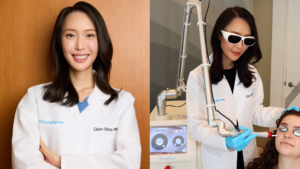
That’s where expertise matters. Dr. Anne Chapas is a board-certified dermatologist, laser expert, and the Founder and Medical Director of UnionDerm. She recently presented at the 2026 American Society for Laser Medicine & Surgery (ASLMS) Annual Conference alongside Dr. Jennifer MacGregor, focusing on the evolving science behind GLP-1-related skin and tissue changes and how dermatologists can approach treatment more thoughtfully and proactively.
We asked Dr. Chapas to break down what she’s seeing in practice today — from muscle loss and skin laxity to hair shedding and facial volume changes — and how patients can approach aesthetic treatments while on GLP-1 medications. Below, she answers some of the most common questions we’re hearing in the office.
What are GLP-1s?
GLP-1s are medications that help regulate appetite and blood sugar, often leading to significant weight loss over a relatively short period of time. These medications work by mimicking a natural hormone in the body that helps regulate appetite, insulin release, and feelings of fullness. Medications like Wegovy, Ozempic, and Zepbound have changed the conversation around obesity and metabolic health, and for many patients, they can be life-changing.
In our practice, we’re seeing a growing number of patients using GLP-1s who want guidance on maintaining healthy skin, facial balance, muscle tone, and hair density during weight loss.
How can GLP-1 medications affect the face and overall skin appearance?
Whether it’s from GLP-1 medications, bariatric surgery, or lifestyle changes, any significant weight loss can affect the skin and soft tissue of the face and body. Volume loss can make certain features appear more pronounced, and skin laxity becomes more visible when the supportive fat pads beneath the skin decrease. The skin doesn’t always contract at the same pace the body changes, which can lead to laxity in the lower face, jawline, neck, and body.
What is “Ozempic face,” and is it something you’re seeing in your practice?
I think the phrase “Ozempic face” can sometimes be misleading because it suggests the medication is directly damaging the face, and that’s not what we’re seeing clinically. The facial changes are largely related to rapid weight loss and shifts in facial fat distribution.
For some patients, those changes are minimal. For others, especially patients who lose weight quickly or already had lower facial volume to begin with, we may see hollowing, skin laxity, or a more fatigued appearance.
What are the most common aesthetic concerns you’re seeing in patients on GLP-1s?
The most common concerns tend to fall into four categories: facial volume loss, skin laxity, changes in muscle tone or body composition, and hair shedding.
Some patients are primarily concerned about loose skin in the face and body, while others notice they look more tired or hollow as facial fat decreases. We’re also having more conversations about preserving muscle mass during weight loss, because muscle plays an important role in overall body composition and skin support. What’s interesting is that these concerns are often interconnected. Loss of muscle mass can affect the structural support beneath the skin, while rapid changes in fat distribution can make laxity more visible.
Hair shedding is another increasingly common concern, particularly after rapid weight loss or nutritional shifts.
Can GLP-1s contribute to muscle loss or changes in body composition?
Yes! And this is one of the most important conversations happening right now around GLP-1 medications. When patients lose weight quickly, some degree of muscle loss can occur alongside fat loss. That’s why Dr. Robyn Gmyrek strongly emphasizes resistance training and adequate protein intake while patients are on these medications.
From a dermatology perspective, muscle loss matters because it can affect posture, skin support, and overall tissue quality. We increasingly think about aesthetics in a more structural way — not just skin, but muscle, fat, and collagen together.
For patients who want to proactively maintain muscle tone, we may recommend muscle stimulation technologies like Accufit or Sofwave Pure Impact alongside exercise and nutritional support.
When is the best time for patients to consider aesthetic treatments — during or after weight loss?
There isn’t a one-size-fits-all answer. It really depends on the patient, the pace of weight loss, and their goals. In many cases, early intervention can actually be beneficial because we can help support skin quality and tissue integrity while changes are happening, rather than waiting until significant laxity develops.
That said, treatment timing should always be individualized. During consultations, we look at how quickly a patient is losing weight, whether their weight has stabilized, their skin elasticity, muscle tone, and overall facial balance before creating a plan.
What treatments do you recommend to address facial volume loss?
For facial volume loss, I generally focus on restoring structure in a very natural way. That may include biostimulatory injectables like Sculptra to help stimulate collagen over time, hyaluronic acid fillers for targeted support, or regenerative treatments like PRF depending on the patient.
In many patients, we’re strategically restoring support in areas like the midface, temples, jawline, or around the mouth. The goal is not to make patients look “filled.” We want them to look healthy, refreshed, and still like themselves.
What treatments are most effective for improving skin laxity in the face?
For facial skin laxity, energy-based devices are often extremely effective. We often use ultrasound and radiofrequency-based technologies to improve firmness in the lower face, jawline, and neck. They stimulate collagen remodeling and tighten deeper tissue layers without surgery.
At UnionDerm, we offer Sofwave, Ultherapy, Thermage, and our latest addition XERF depending on the patient’s anatomy, degree of laxity, and goals.
Is hair loss a common concern you see with GLP-1 patients?
We are seeing more patients concerned about increased hair shedding during rapid weight loss. Any major metabolic or physiologic shift can affect the hair cycle, particularly if weight loss is rapid. It’s important to understand that this isn’t necessarily caused directly by the medication itself. Often, it’s related to the rapidity of weight loss and changes in nutrition or protein intake.The good news is that we now have more options than ever to support hair health early and potentially minimize long-term thinning.
What treatments do you recommend for patients experiencing hair loss on GLP-1s?
For patients experiencing increased shedding, I like to intervene early. The first step is understanding what type of hair loss is occurring and whether there are contributing nutritional deficiencies. From there, treatment may include PRP for hair restoration, PRF, topical or oral medications, nutritional optimization, and newer laser-based technologies like Folix laser hair restoration.
Dr. Nkem Ugonabo has seen great patient success by taking a comprehensive approach to hair restoration. Because treating hair loss successfully often requires addressing multiple contributing factors, a combination of treatments is usually the best option.
How do you approach treatment planning differently for patients on GLP-1s?
Patients on GLP-1 medications require a more dynamic treatment plan because their face and body composition may still be evolving over time. We think carefully about timing, pacing, and avoiding overcorrection while weight loss is ongoing.
I also spend more time assessing muscle tone, skin elasticity, and tissue quality — not just volume loss alone. The goal is always to maintain harmony and natural facial balance.
What does an ideal treatment plan look like for someone using GLP-1s and wanting to maintain or improve their appearance?
The ideal plan is proactive, individualized, and focused on maintaining healthy tissue rather than chasing dramatic correction later. The best results happen when we approach these patients comprehensively and early.
For many people, that means nutritional support, medical-grade skincare, collagen-stimulating procedures, and strategic maintenance treatments throughout the weight loss process. Depending on the patient, we may incorporate muscle stimulation devices like Accufit and Sofwave Pure Impact, skin tightening technologies like Sofwave, Ultherapy, Thermage FLX, or XERF, regenerative hair treatments like PRP and Folix, or conservative facial volume restoration.
Most importantly, we want patients to look healthy, vibrant, and natural — not overtreated.
When should I start treatments if I’m taking Ozempic or a GLP-1 medication?
I usually tell patients that the best time to start is when they begin noticing changes. We’d rather help patients maintain healthy skin quality and muscle support proactively than wait until laxity or volume loss becomes more advanced.
That doesn’t mean everyone needs aggressive treatment immediately. Often, it’s about monitoring how the face and body are responding to weight loss and creating a personalized plan that evolves over time.
Patients should know that there are effective solutions no matter where they are in the process. We regularly treat patients who are newly starting GLP-1 medications as well as patients who have already completed major weight loss and are now focused on restoration and maintenance.